
News
How Do You Make Towels Soft Again? Old Towels Softer & More Absorbent
How do I make towels soft again? There’s nothing like a fresh set of fluffy towels, but sometimes it feels like they lose their comfy cosy texture after just a few washes. It gets kind of discouraging when you know it’s never going to be as nice as the first time when you step out of the shower to get dry.
You should also know that you’re far from alone in this struggle, as it’s probably more common than not. Something as simple as your recommended laundry routine could be the culprit behind your dry and dull towels.
Luckily, there are a few easy solutions out there that can put the life back into your towels and the luxury back into your routine. Check out our guide below and try whichever ones fit best until you get your towels back to fluffy perfection.

Why are towels hard after washing?
Ever pulled your towels out of the dryer, only to find that they’ve lost their softness and feel stiff and scratchy? There are several potential causes, including detergent residue, mineral buildup, and friction during the washing process. Towels are absorbent, which means they’re especially prone to collecting soap and fabric softener residue that doesn’t properly rinse out in the wash. This can accumulate over time, leading to reduced absorbency and a rough, scratchy texture. To prevent this, it’s important to understand the right techniques for washing and maintaining your towels. If you follow the right steps, you can extend their lifespan and keep them feeling soft and cozy for years to come!
Note: Towels don’t last forever, as much as we’d like them to. Typically, they last somewhere between two and three years. If your towels are older than that, and feeling a little scratchy and worn-out, it might just be time to replace them.
How do I make towels soft again?
Washing techniques to restore softness:
Using baking soda and vinegar
If you find yourself with stiff towels, it’s not necessarily time to restock. Two pantry staples can help restore towels in just two wash cycles. “Vinegar and baking soda work like a charm when your towels are in need of some TLC,” says Eichholz. “Vinegar helps break down buildup and baking soda helps neutralize odor.” When used together, the two ingredients will cancel each other out, so this technique will require separate wash cycles. Repeat this process monthly or whenever your towels begin to feel stiff as it will help soften the fibers.
- Add your towels to the washer, being sure you don’t overload it.
- In place of detergent, use one cup of white vinegar.
- If you’re washing colored towels, set the water temperature to warm. If you’re washing white towels, wash your towels on a hot cycle.
- After the cycle is complete, add 1 cup of baking soda directly onto the towels.
- Run the cycle again, warm for colored towels and hot for white towels.
- Dry the load on low to medium heat.

Using White Vinegar
Simply opting for white vinegar is a great alternative for fabric softener as traditional fabric softener can sometimes leave a residue which will cut down on your towel’s absorbency. Vinegar will both soften your linens and provide odor-eliminating benefits. If you’re dealing with hard water deposits or any other residue, a wash with vinegar should help remedy your stiff-towel issues.
- Add the towels to the drum, being sure to leave plenty of extra room for the towels to move freely during the cycle.
- Add two cups of vinegar directly to the drum. Do not use fabric softeners or detergent.
Run the load on a warm-to-hot water cycle. - Once the cycle is complete, dry the load on low to medium heat.
Using Baking Soda
Baking soda is a natural odor eliminator. Whether you’re dealing with musty-smelling towels or trying to eliminate any lingering vinegar smell after a vinegar wash cycle, use this technique for both ditching smells and restoring softness to your towels with every load.
- Place a small- to medium-sized load of towels in your washing machine.
- Sprinkle ½ cup of baking soda over the towels in the drum.
- Add detergent as normal, but skip the fabric softener.
- Run the load on either a warm or hot cycle.
- Once the wash cycle is complete, dry the towels on low to medium heat.
Additional Tips for Softening Towels
Avoiding Fabric Softeners
Chemical residue can be a primary cause of stiff towels and products like fabric softener can often be to blame. “Using fabric softener actually does more harm than good as it coats the terry with chemicals that reduce their absorption,” says Eichholz. “If you continue to dry your products on low, and give them a little shake after the dryer, you’ll never feel the need to use fabric softener.” Dryer sheets can also be a culprit. To help achieve the same result, but without the residue, LaLonde recommends making the switch to dryer balls.
Regular Maintenance
Excessive detergent use can cause towel-stiffness issues, so always use the amount recommended by your detergent manufacturer. LaLonde also suggests loading your towels into the washer loosely, rather than allowing them to get too packed together. This allows the towels to move around and get thoroughly cleaned. It’s also best not to wash towels with other items as rougher fabrics, zippers, and other embellishments could cause the towels to snag or become damaged.
Water-softening tablets
If you live in an area with hard water and don’t already use any kind of water treatment in your home, consider adding water softening tablets to your laundry. It helps reduce the mineral content in the hard water and prevent build-up on towel fabrics.
Long-term Effects
Unfortunately, both dryer sheets and fabric softeners aren’t good for towels in the long run. Over time, the chemicals in the products build up and become embedded in the fabric. If you don’t have hard water removing items handy, you can wring out the towels yourself to reduce mineral build-up. The more you can get out before they go in the dryer, the better.
Invest in high-quality towels
At the end of the day, if you want your towels to withstand multiple washes and regular use, it’s important to invest in quality materials. For a wide variety of towels and other quality British homeware, visit Homescapes. Options include Vietnamese Turkish, Egyptian, and even Portuguese cotton. Turn a basic bathroom into a luxurious reprieve with fine fabrics sourced from all over the world. Don’t forget to use the tips above to keep these towels feeling their best!
Check your laundry habits at home
You might have the idea in your head that you’re doing your due diligence when it comes to laundry duties. But the instructions on your supplies might not be best when it comes to the material of your towels.
Dryer balls
There’s a good chance you’ve seen dryer balls advertised for large blankets and quilts. When you put them in your dryer, they help work out any still spots in the material. It works on blankets, so there’s no surprise it’s a great hack for towels too!
Leave room in the washing machine
It sort of goes without saying, but don’t overfill your washing machine, especially when you’re cleaning bulkier items like towels. If you don’t leave some room in the washer, your towels won’t be able to properly soak, rinse, and spin. There’s a much higher chance you’ll have detergent residue left on the towels if you don’t leave an appropriate amount of space for the water to travel.
As a frame of reference, try to keep your washer loosely packed and about half-full. Use the same standard for your dryer as well, if you use one.
Detergent
You need to be mindful of the amount of detergent you use when you wash anything. However, when it comes to your towels, you can get build-up in the fibres. This causes the towels to absorb much less moisture and makes the texture rougher, making them inefficient and uncomfortable for you. Not to mention, it can also contribute to the waste of your laundry liquid tabs. You should use about half the indicated amount of liquid or powder when washing towels. Some even recommend letting the water start to fill your machine before adding it.
Don’t be shy to cut back on your detergent usage. Samsung Newsroom UK reports that up to 87% of those surveyed tend to guess on how much to use. Based on this alone, there’s a good chance that a large population of people are overusing detergent on towels and other items. When you pay mind to how much detergent you use per load, not only will you improve the texture of your towels, but you’ll save money too!

Hot wash and cold rinse method
Not all machines have the option, but if your washer allows you to use different wash and rinse temperatures, you’ll want to try the hot/cold method. The hot wash cycle will help remove dirt and other build-ups, while the cold rinse helps the fibres return to their intended texture, preventing any clumping or undesirable effects.
The only thing to keep in mind when you use a hot wash is that some towels might fade depending on the colour. Always make sure you double-check the care label before you put anything in hotter temperatures.
Decrease the tumble dryer temperature
You might be tempted to use the tumble dry feature to make things fluffy right out of the machine, however this fresh, comfy feeling doesn’t usually last long. This setting also causes wear to the material over time, so you’re just hurting yourself in the long run.
There are a few different things you can do to reduce the amount of tumble drying you do.
- If you have the space, you should try to hang them outside to dry on a windy day.
- Use lower temperatures and slower speeds on your dryer, the gentle cycle is your friend!
- Alternate between drying methods to avoid repeat tumble drying.
Fold and hang after drying
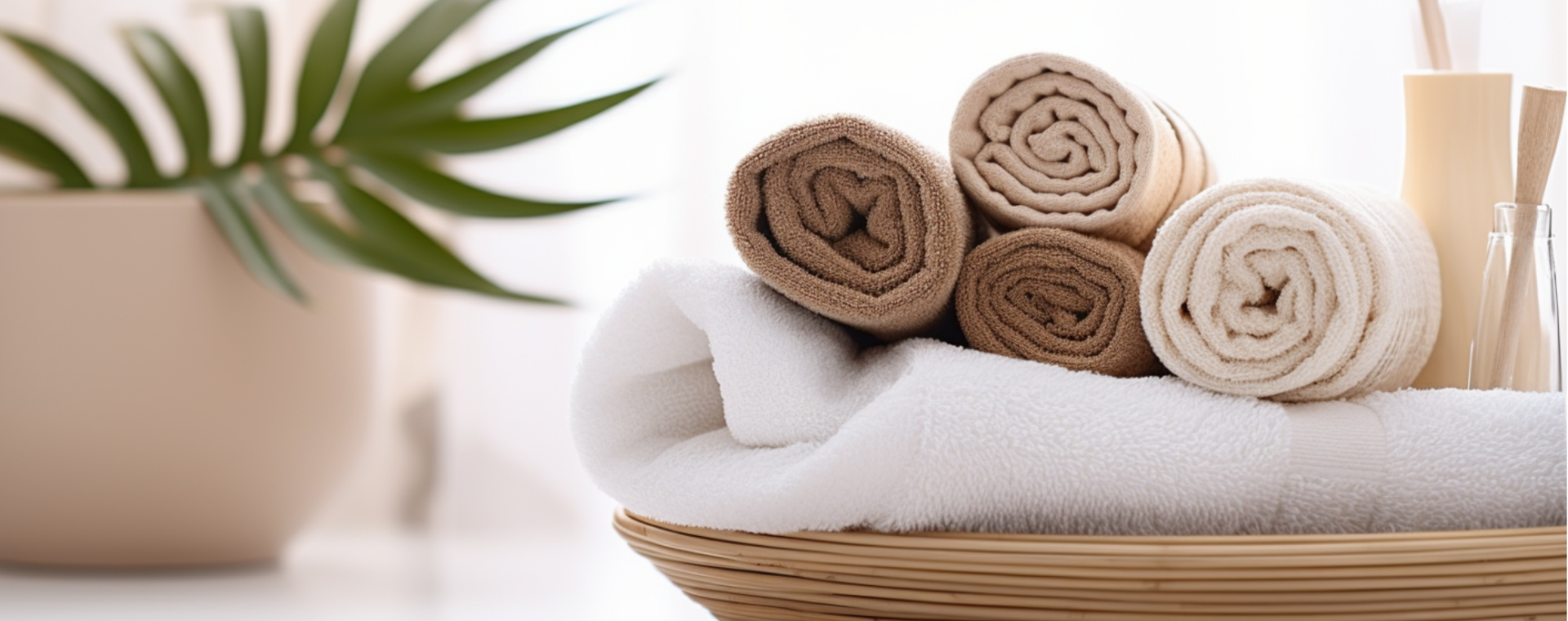
Maintaining fluffy towels doesn’t stop when the laundry is done, you must think about how you store them too. Try to prevent stiff creases by using lose folds and even rolling your towels. Instead of storing one on top of the other, store them side by side—this keeps the weight evenly distributed. Lastly, remember not to stack your towels when using a hanging rack, it causes unnecessary stress on the bottom towel.
About us
TQT Trading Co., Ltd. was established in 2011, operating as a manufacturing unit, specializing in exporting, we aim for the ideal:
Long term cooperation, joint profits
Our company is proud to be an enterprise with many years of experience in the textile and garment field and is a reputable exporter in Vietnam and the world market, especially the Japanese market.
Over the past 12 years, the company has always strived to build good cooperative relationships with partners on the basis of bringing bilateral benefits, constantly developing production activities and promoting its exports, Providing customers with products and services of the best quality.
To meet the diverse needs of the market, customers always want to have outstanding and different products, so TQT Trading Co., Ltd. manufactures products according to customer requirements.
We always provide all the necessary information to design the most impressive and quality cotton scarves, socks, and gloves for customers such as: material, color, size, weight, decorative design. uniqueness, quantity,… of each order requested by the customer.
Contact us:
- Head Office: 9F, 477 Minh Khai st., Hai Ba Trung dist., Hanoi, Vietnam
- Factory: Road 200, Vinh Khuc ward, Van Giang dist., Hung Yen province, Vietnam
- Email: info@tqt.vn
- Tel: (+84)-24-3747-5882
- Fax: (+84)-24-3747-5936
- Website: http://tqt.vn